



Apr . 01, 2024 17:55 Back to list
Horse Stable how big is a horse stable Performance Engineering

Introduction
The dimensional requirements for a horse stable are a critical factor in equine welfare, operational efficiency, and long-term facility durability. Stables are not simply shelters; they are integral components of a horse’s daily routine impacting health, safety, and psychological well-being. Determining the appropriate size transcends basic enclosure provision and requires careful consideration of breed, age, intended use (e.g., breeding, competition, rest), and regional climate. Historically, stable sizes were often determined by tradition or available land, leading to significant variations in quality and suitability. Modern equine management emphasizes scientifically-backed dimensions maximizing comfort and minimizing injury risk. This guide details the critical considerations for determining the optimal size of a horse stable, encompassing material science, construction principles, performance engineering, and associated industry standards.
Material Science & Manufacturing
Stable construction materials profoundly impact size considerations. Traditionally, wood (specifically pressure-treated lumber) was the dominant material. Its workability and cost-effectiveness are advantages, but its susceptibility to rot, insect infestation, and fire necessitates regular maintenance and potentially impacts structural integrity, dictating larger support structures for equivalent load bearing. Steel framing, increasingly common, offers superior strength-to-weight ratio, allowing for larger, more open stall designs while minimizing structural components. However, steel’s thermal conductivity requires insulation considerations, influencing internal dimensions to maintain comfortable temperatures. Concrete, often used for foundations and lower wall sections, provides exceptional durability and fire resistance, but its rigidity necessitates careful foundation design to prevent cracking and shifting, which could affect stall dimensions over time. Manufacturing processes also play a role. Pre-fabricated modular stall systems, constructed from aluminum or composite materials, offer rapid installation and dimensional consistency. Welding quality in steel framing is paramount; substandard welds represent critical failure points. Wood treatment processes, employing preservatives like chromated copper arsenate (CCA) or alkaline copper quaternary (ACQ), must adhere to environmental regulations and ensure long-term efficacy. The choice of materials directly influences the internal usable space within a given overall stall footprint. Consideration must also be given to bedding material – straw, shavings, or rubber mats – as these impact the necessary floor space and drainage requirements.
Performance & Engineering
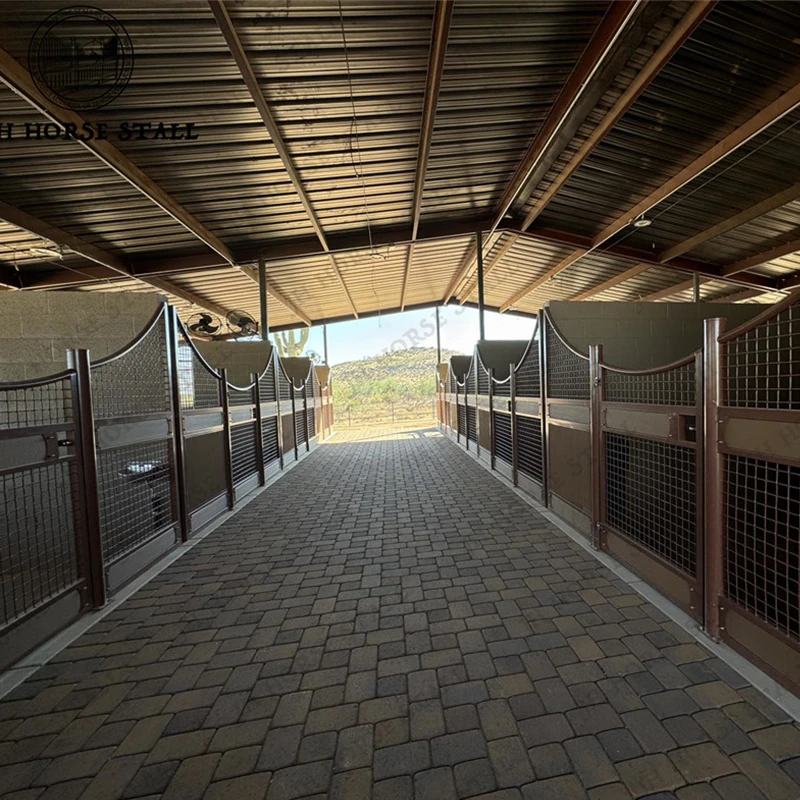
The performance of a horse stable, specifically its ability to withstand dynamic and static loads, is directly tied to its dimensions and construction. Force analysis must account for the horse’s weight, movement patterns (e.g., kicking, rearing, shifting weight), and potential impact forces. Stall walls must resist lateral pressure and shear forces. The stall’s height influences ventilation and the horse’s natural head and neck position; inadequate height can lead to claustrophobia and respiratory issues. Doorways require sufficient width and height to allow the horse to enter and exit safely without injury, minimizing the risk of brushing or striking its shoulders. Environmental resistance is crucial. Wind loading calculations dictate the necessary structural reinforcement to withstand regional weather conditions. Drainage systems must effectively manage rainwater and waste runoff to prevent bacterial growth and structural degradation. Compliance requirements, such as those outlined by the American Society for the Prevention of Cruelty to Animals (ASPCA) or local building codes, mandate minimum stall sizes based on horse height and weight. Furthermore, the stall’s design must facilitate ease of cleaning and maintenance, impacting the long-term operational efficiency of the facility. The stall floor’s surface must provide adequate traction to prevent slips and falls, particularly in wet conditions, influencing material selection and surface texture.
Technical Specifications
| Stall Width (Minimum) | Stall Depth (Minimum) | Stall Height (Minimum) | Doorway Width (Minimum) |
|---|---|---|---|
| 10 ft (3.05 m) | 12 ft (3.66 m) | 8 ft (2.44 m) | 4 ft (1.22 m) |
| 12 ft (3.66 m) – Recommended for larger breeds | 14 ft (4.27 m) – Recommended for larger breeds | 9 ft (2.74 m) – Recommended for draft horses | 4.5 ft (1.37 m) – For larger breeds |
| 8 ft (2.44 m) – For ponies (may be reduced further) | 10 ft (3.05 m) – For ponies | 7 ft (2.13 m) – For ponies | 3.5 ft (1.07 m) – For ponies |
| Variable – Foaling stalls require specific configurations | Variable – Foaling stalls require specific configurations | Variable – Foaling stalls require specific configurations | Variable – Foaling stalls require specific configurations |
| Material: Steel (Yield Strength) | Material: Steel (Yield Strength) | Material: Wood (Modulus of Elasticity) | Material: Wood (Modulus of Elasticity) |
| >36 ksi (248 MPa) | >36 ksi (248 MPa) | >1,300 psi (8.96 MPa) | >1,300 psi (8.96 MPa) |
Failure Mode & Maintenance
Common failure modes in horse stable construction include wood rot, steel corrosion, concrete cracking, and fastener failure. Wood rot, accelerated by moisture exposure, compromises structural integrity and can lead to collapse. Steel corrosion, particularly in coastal environments, weakens framing members and reduces load-bearing capacity. Concrete cracking, stemming from inadequate foundation design or thermal expansion/contraction, creates pathways for water ingress and further deterioration. Fastener failure (e.g., loose bolts, stripped screws) results in structural instability. Delamination of composite materials, caused by moisture penetration or UV degradation, reduces their strength and durability. Oxidation of metal components, especially hinges and latches, can impede functionality and create safety hazards. Preventive maintenance is critical. Regular inspection for wood rot and steel corrosion, application of protective coatings, and tightening of fasteners are essential. Prompt repair of any damage is crucial to prevent escalation. Concrete structures should be periodically inspected for cracking, and appropriate sealing measures should be implemented. Proper ventilation reduces moisture buildup, mitigating the risk of wood rot and corrosion. The stall’s bedding should be regularly cleaned and replaced to maintain hygiene and prevent bacterial growth. Regularly assess the stall's structural components, checking for signs of wear, damage or instability.
Industry FAQ
Q: What is the primary consideration when determining stall size for a warmblood horse?
A: The primary consideration is the horse’s height at the withers and body length. Warmbloods are typically larger horses; therefore, a minimum stall size of 12 ft x 12 ft is recommended, but 12ft x 14ft is preferable to allow for adequate turning space and prevent injury. Account for the horse’s conformational characteristics; a horse with a long body will require a deeper stall.
Q: How does ventilation impact stall size requirements?
A: Adequate ventilation directly influences stall size. Poor ventilation can lead to ammonia buildup from urine, creating respiratory issues. Higher stall ceilings (minimum 8ft, ideally 9ft for larger breeds) improve air circulation. Stall design should incorporate ventilation openings strategically placed to maximize airflow without creating drafts.
Q: What are the implications of using steel framing versus wood framing concerning stall dimensions?
A: Steel framing allows for larger, more open stall designs due to its higher strength-to-weight ratio. This means you can achieve the same structural integrity with less material, potentially increasing the usable interior space. However, steel’s thermal conductivity necessitates insulation, which slightly reduces the overall interior dimensions.
Q: What level of drainage is necessary in a stable stall, and how does it relate to stall size?
A: Effective drainage is paramount to prevent bacterial growth and maintain hygiene. The stall floor should slope gently towards a drainage point. The size of the stall influences the volume of liquid waste that needs to be managed. Larger stalls require more robust drainage systems.
Q: What compliance standards should be considered when designing horse stable dimensions?
A: Compliance standards vary by location, but commonly referenced guidelines include those from the ASPCA, local building codes, and equine facility design manuals. These standards typically specify minimum stall sizes based on horse size and intended use. Local zoning regulations may also dictate setback requirements and building height restrictions, indirectly influencing stall dimensions.
Conclusion
Determining the appropriate size for a horse stable is a multifaceted engineering problem requiring a holistic approach. It’s not simply about meeting minimum requirements, but optimizing the environment for equine health, safety, and well-being. The integration of material science principles, structural engineering analysis, and adherence to industry standards are critical for long-term durability and operational efficiency. The specific requirements will vary based on breed, age, intended use, and environmental conditions, necessitating a customized design approach.
Future advancements in stable design may include the incorporation of smart sensors to monitor environmental conditions (temperature, humidity, air quality) and dynamically adjust ventilation systems. Prefabricated, modular stall systems constructed from sustainable and recyclable materials are likely to become increasingly prevalent. Continuous research into equine biomechanics and behavioral patterns will further refine stall design, leading to more comfortable and safer environments for horses.
-
toy horse with stable Performance Analysis
-
stables for horses Performance and Engineering
-
small horse stable floor plans Performance Analysis
-
minecraft horse stables Performance Engineering
-
melissa and doug horse stable Material Science and Manufacturing
-
horses in the stable song Material Science and Manufacturing
-
horse stable in minecraft Performance and Engineering
-
Horse in a stable Structural Engineering and Performance Analysis
-
boarding stables for horses Material Science and Manufacturing
-
Pasture Turnout will pasturing horses reduce stable vices Performance Analysis
-
toy horse stable Material Science and Manufacturing
-
our generation horse stable Material Science Manufacturing
-
stardew horse stable Performance Analysis
-
Stable horse Structural Performance Analysis
-
horses in the stable lyrics Data Integrity Analysis