



Apr . 01, 2024 17:55 Back to list
horse riding stables Material Science and Manufacturing
Introduction
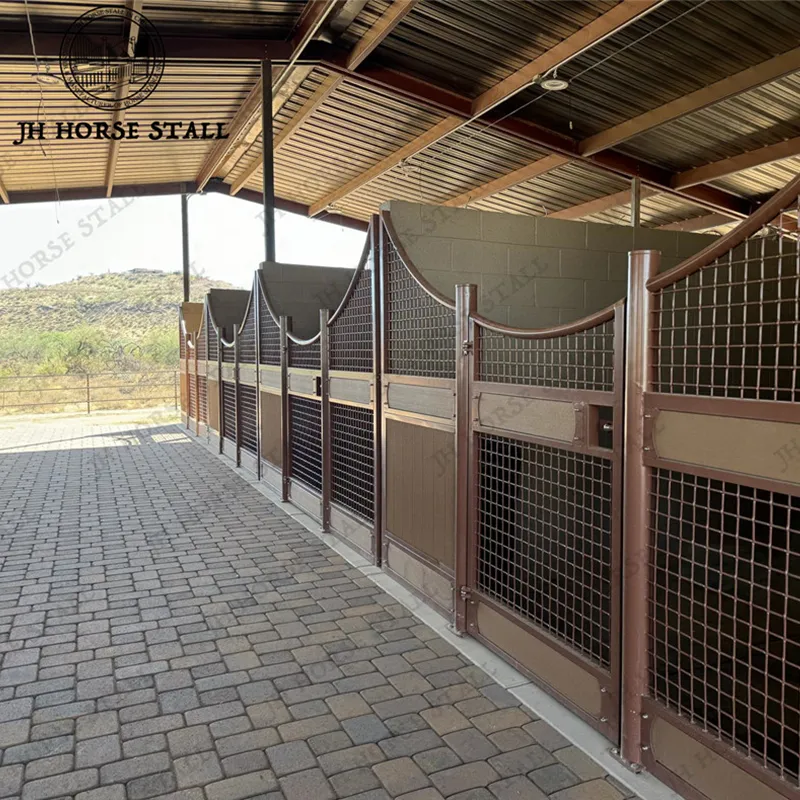
Horse riding stables represent a complex infrastructure supporting equine health, rider safety, and operational efficiency. These facilities, ranging from small private operations to large commercial enterprises, are fundamentally engineered systems comprising building structures, specialized flooring, waste management systems, and equine containment solutions. Their performance is critically dependent on material durability, structural integrity, and adherence to stringent hygiene protocols. This guide details the technical aspects of stable construction and maintenance, addressing material science, engineering principles, failure modes, and relevant industry standards. The core performance metrics of a stable environment revolve around maintaining a safe and sanitary environment for horses, minimizing stress on the animals, and ensuring the long-term structural stability of the facility despite significant biological and mechanical loads. A key industry pain point revolves around controlling ammonia levels, managing manure efficiently, and preventing musculoskeletal injuries to horses due to unsuitable flooring or stall design. Furthermore, lifecycle costs, encompassing construction, maintenance, and eventual replacement, represent a significant budgetary concern for stable owners.
Material Science & Manufacturing
Stable construction leverages a diverse range of materials, each selected for specific performance characteristics. Structural elements commonly employ pressure-treated lumber (typically Southern Yellow Pine), galvanized steel framing, or concrete foundations. The lumber undergoes treatment with preservatives like chromated copper arsenate (CCA) or alkaline copper quaternary (ACQ) to resist fungal decay and insect infestation. Galvanized steel offers superior strength and corrosion resistance, particularly in areas exposed to moisture and equine waste. Concrete provides a durable and stable foundation capable of supporting substantial loads. Stall flooring is a critical component, often constructed from hardwood (oak, maple), rubber matting, or packed clay/stone dust. Hardwood, while aesthetically pleasing, requires regular maintenance to prevent splintering and bacterial contamination. Rubber matting, typically made from recycled tire materials or synthetic polymers (EPDM), offers superior cushioning, traction, and hygiene, simplifying cleaning procedures. Manure management systems incorporate materials like polypropylene, polyethylene, and concrete for storage and removal infrastructure. Manufacturing processes include precision sawing and joinery for lumber, roll-forming and welding for steel structures, and casting/curing for concrete. Key parameter control focuses on moisture content in lumber (optimally below 20%), galvanization thickness in steel (minimum 60 microns), concrete compressive strength (typically 25-35 MPa), and polymer density in rubber matting (1.1-1.4 g/cm³). Proper ventilation systems utilize galvanized steel ductwork manufactured to SMACNA standards, ensuring consistent airflow and moisture removal.
Performance & Engineering
The performance of a horse riding stable is intrinsically linked to structural engineering principles, environmental control, and equine biomechanics. Stall construction must withstand dynamic loads imposed by horses – including impact forces during movement, leaning pressure against walls, and concentrated loads from body weight. Force analysis dictates that stall walls must be capable of resisting lateral loads of at least 600-800 lbs per horse. Roofing systems require load bearing calculations accounting for snow loads (depending on geographic location) and wind resistance. Ventilation is crucial for maintaining air quality, controlling humidity, and removing ammonia (NH₃) generated from equine waste. Ammonia concentration exceeding 20 ppm can cause respiratory irritation in horses. Environmental resistance necessitates protection against moisture ingress, UV degradation, and thermal fluctuations. Flooring must provide adequate traction to minimize slips and falls, while simultaneously offering cushioning to reduce stress on joints and tendons. Compliance requirements involve adherence to local building codes, fire safety regulations (NFPA standards), and equine welfare standards dictated by organizations like the American Association of Equine Practitioners (AAEP). Drainage systems must be engineered to prevent water accumulation and facilitate efficient waste removal, preventing the proliferation of pathogens. Stable designs often incorporate passive ventilation strategies (ridge vents, gable end vents) supplemented by mechanical ventilation systems with controlled airflow rates.
Technical Specifications
| Material | Property | Specification | Testing Standard |
|---|---|---|---|
| Pressure-Treated Lumber | Moisture Content | ≤ 20% | ASTM D1037 |
| Galvanized Steel | Coating Thickness | ≥ 60 µm | ASTM A123 |
| Concrete | Compressive Strength | 25-35 MPa | ASTM C39 |
| Rubber Matting (EPDM) | Density | 1.1-1.4 g/cm³ | ASTM D792 |
| Hardwood (Oak) | Modulus of Rupture | ≥ 100 MPa | ASTM D143 |
| Polypropylene (Manure Boards) | Tensile Strength | ≥ 20 MPa | ASTM D638 |
Failure Mode & Maintenance
Horse riding stables are susceptible to several failure modes, requiring proactive maintenance strategies. Lumber structures are prone to fungal decay (rot) if not adequately protected, leading to structural weakening and potential collapse. Corrosion of galvanized steel can occur due to prolonged exposure to acidic environments (equine urine), resulting in loss of structural integrity. Concrete cracking can develop due to freeze-thaw cycles, excessive loading, or improper curing. Rubber matting can experience tearing, cracking, or degradation from UV exposure and chemical contact (disinfectants). Hardwood flooring is susceptible to splintering, warping, and bacterial contamination if not regularly sealed and cleaned. Failure analysis often reveals that inadequate ventilation contributes to accelerated corrosion and wood decay due to increased humidity and ammonia levels. Maintenance solutions include regular application of wood preservatives, inspection and repair of galvanized steel coatings, crack sealing in concrete, periodic replacement of rubber matting, and thorough cleaning and sealing of hardwood flooring. Proactive manure management is critical to minimize ammonia buildup and prevent corrosion. Annual structural inspections by qualified engineers are recommended to identify potential weaknesses before they escalate into significant failures. Furthermore, proper stall cleaning and disinfection protocols are essential to maintain hygiene and prevent the spread of equine diseases.
Industry FAQ
Q: What is the optimal stall size for a 16-hand horse, and what engineering considerations are paramount in its design?
A: A commonly recommended stall size for a 16-hand horse is 12’ x 12’. However, engineering considerations extend beyond dimensions. The stall must withstand lateral forces of at least 600-800 lbs. Wall construction should utilize robust materials (pressure-treated lumber or steel) and secure joinery. The stall door should swing freely and incorporate a secure latching mechanism. Flooring should provide adequate traction and cushioning. Proper ventilation is critical to prevent ammonia buildup. The stall design should also prioritize visibility to minimize horse stress.
Q: What are the key differences between EPDM and recycled tire rubber matting, and what are the trade-offs in terms of durability and cost?
A: EPDM rubber matting is a synthetic polymer offering superior UV resistance, color stability, and overall durability. It typically has a higher initial cost. Recycled tire rubber matting is more economical but is susceptible to UV degradation, color fading, and may contain residual metal fragments. EPDM generally lasts 2-3 times longer than recycled tire matting, making it a more cost-effective long-term investment despite the higher upfront expense.
Q: How can I effectively manage ammonia levels within the stable environment, and what are the health implications for horses if these levels are not controlled?
A: Effective ammonia management involves frequent manure removal, proper stall bedding, and adequate ventilation. Bedding materials like wood shavings, straw, or peat moss absorb urine and reduce ammonia production. A well-designed ventilation system (natural or mechanical) removes ammonia-laden air. Ammonia levels exceeding 20 ppm can cause respiratory irritation, coughing, and increased susceptibility to respiratory infections in horses. Prolonged exposure can lead to permanent lung damage.
Q: What are the primary considerations when selecting a concrete foundation for a stable, and what preventative measures can be taken to mitigate cracking?
A: Concrete foundation selection requires consideration of soil bearing capacity, frost depth, and anticipated loads. A properly designed foundation must distribute weight evenly and prevent settlement. Preventative measures to mitigate cracking include using appropriate concrete mix designs with adequate air entrainment, proper curing procedures (maintaining moisture for 7-10 days), and the installation of control joints to accommodate thermal expansion and contraction.
Q: What are the best practices for maintaining hardwood flooring within a horse stall, and what types of sealants are most effective in preventing bacterial contamination?
A: Maintaining hardwood flooring requires regular cleaning with mild detergents and periodic sealing with polyurethane or epoxy-based sealants. These sealants create a protective barrier against moisture, bacterial penetration, and wear. Avoid abrasive cleaning agents that can damage the wood finish. Regular inspection for splintering or damage is crucial. Applying multiple coats of sealant provides enhanced protection. Ensure the sealant is non-toxic and safe for equine use.
Conclusion
The effective design, construction, and maintenance of horse riding stables demand a comprehensive understanding of material science, engineering principles, and equine welfare. The long-term performance and safety of these facilities are inextricably linked to the selection of durable materials, robust structural design, and proactive maintenance protocols. Addressing industry pain points such as ammonia control, waste management, and flooring durability requires a holistic approach encompassing ventilation systems, hygienic bedding materials, and appropriate flooring choices.
Future advancements in stable technology may focus on incorporating smart sensor systems for real-time monitoring of environmental parameters (temperature, humidity, ammonia levels), automated manure removal systems, and advanced flooring materials with enhanced cushioning and antimicrobial properties. Prioritizing these technological developments and adhering to industry best practices will ensure the creation of safer, healthier, and more sustainable environments for both horses and stable personnel.
-
toy horse stable Material Science and Manufacturing
-
our generation horse stable Material Science Manufacturing
-
stardew horse stable Performance Analysis
-
Stable horse Structural Performance Analysis
-
horses in the stable lyrics Data Integrity Analysis
-
horse riding stables Material Science and Manufacturing
-
Horse in stable Structural Engineering
-
horse boarding stable Performance Engineering
-
horse and stable toy Material Science
-
barbie horse stable Material Performance Analysis
-
Our Generation Doll Horse Stable Performance Analysis
-
minecraft horse stable ideas Construction Performance Analysis
-
horse stable toy Performance Analysis
-
horse stable supplies Material Science
-
horse boarding stables near me Material Science and Manufacturing