



Apr . 01, 2024 17:55 Back to list
Horse Stable Design Material Performance

Introduction
Horse stable design is a specialized facet of agricultural engineering, demanding a nuanced understanding of animal welfare, material science, and structural integrity. Positioned within the broader livestock housing industry, a stable’s primary function is to provide a safe, comfortable, and hygienic environment for equines, minimizing stress and maximizing health. Core performance metrics revolve around durability – resisting the forces exerted by a 500-1000 kg animal – ventilation to manage ammonia and dust levels, and fire resistance given the presence of combustible bedding materials. Modern stable design increasingly incorporates biosecurity considerations to prevent disease transmission and optimize waste management. The industry faces increasing pressure to balance traditional aesthetics with sustainable materials and practices, demanding a move beyond solely timber-framed construction.
Material Science & Manufacturing
The selection of materials for horse stable construction is critical, governed by cost, durability, safety, and animal well-being. Traditionally, timber (primarily pressure-treated softwood like Douglas Fir or Southern Yellow Pine) has been the dominant material, offering a balance of strength, workability, and cost-effectiveness. However, timber is susceptible to rot, insect infestation, and fire. Modern alternatives include steel framing (galvanized or stainless steel to mitigate corrosion from urine and moisture) and composite materials like recycled plastic lumber. Concrete is extensively used for foundations and flooring, requiring careful consideration of drainage to prevent standing water. Bedding materials—straw, wood shavings, peat moss, or rubber mats—influence stall hygiene and impact hoof health. Manufacturing processes vary: timber framing employs mortise-and-tenon joinery, alongside modern bolting and screwing techniques; steel framing utilizes welding and bolting; and concrete requires precise mixing ratios and curing procedures to achieve specified compressive strength. Key parameter control involves moisture content in timber (below 20% to prevent warping and decay), galvanization thickness in steel (minimum 610 g/m² for adequate corrosion protection), and concrete slump (4-6 inches for optimal workability and strength). Chemical compatibility between construction materials and cleaning agents (disinfectants, detergents) must also be assessed to prevent degradation.
Performance & Engineering
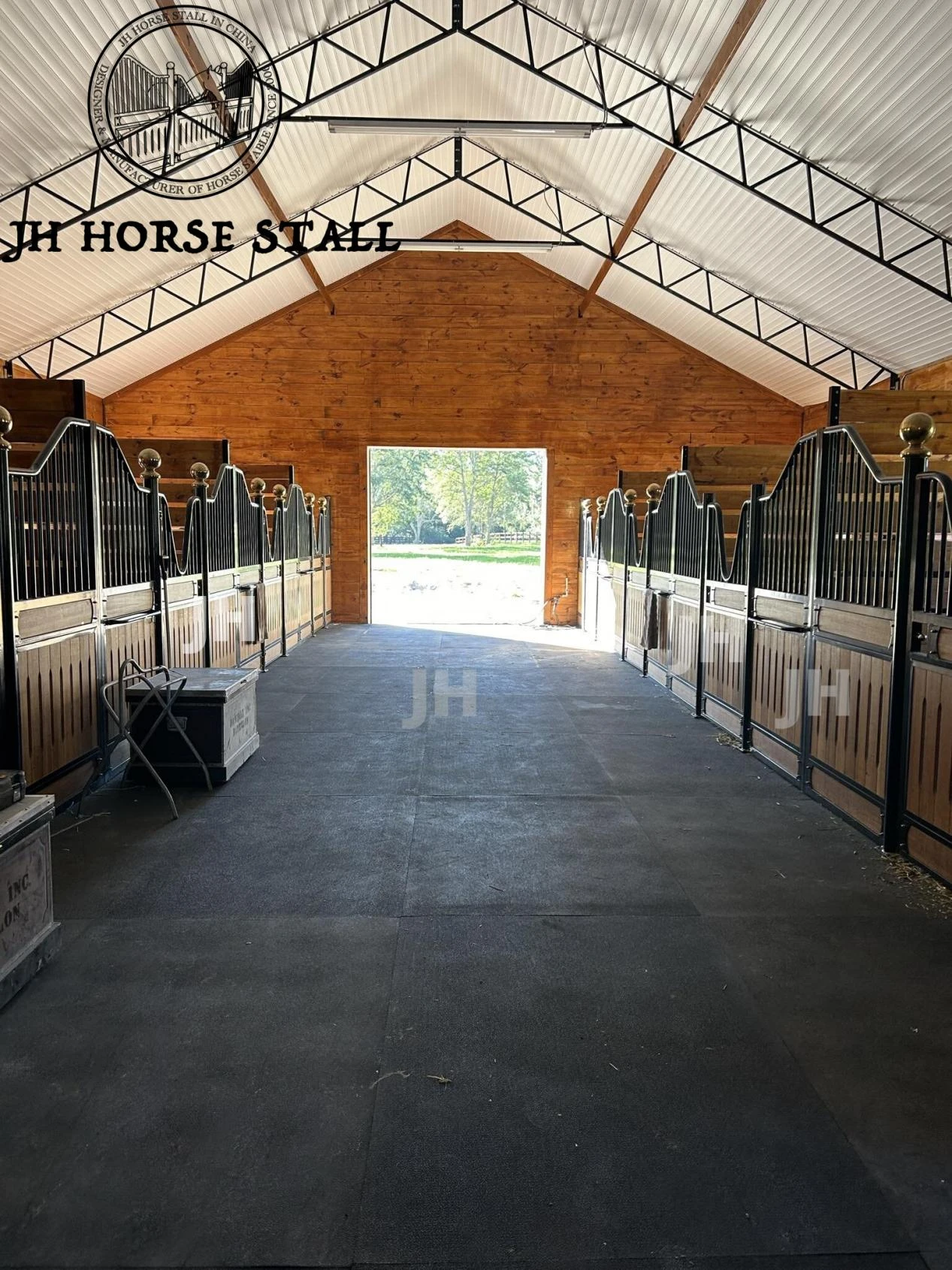
Stable performance hinges on several key engineering principles. Structural analysis is paramount, focusing on load-bearing capacity to withstand the dynamic forces exerted by a horse leaning, kicking, or rolling. Wall and stall construction must resist lateral loads. Ventilation systems are engineered to maintain air quality, mitigating ammonia (NH3) concentrations (target <25 ppm) and dust particulate matter (PM10 < 5mg/m³). This typically involves natural ventilation via high-level vents and ridge openings, supplemented by mechanical fans in larger facilities. Drainage systems are critical to prevent the buildup of manure and urine, leading to bacterial growth and odor issues. Slope gradients (1-2% minimum) and permeable surfaces are crucial. Fire resistance is addressed through material selection (non-combustible roofing) and compartmentation (firebreaks). Stall design must consider equine behavior – minimizing entrapment hazards, providing adequate turning space (minimum 10ft x 12ft per horse), and incorporating smooth, rounded edges. Compliance requirements vary by region, often encompassing building codes (structural safety), animal welfare regulations (space allowances, ventilation standards), and environmental regulations (manure management).
Technical Specifications
| Parameter | Unit | Typical Value (Traditional Timber Stable) | Typical Value (Modern Steel Frame Stable) |
|---|---|---|---|
| Stall Width | ft | 12 | 12 |
| Stall Depth | ft | 10 | 10 |
| Wall Height | ft | 8-10 | 8-10 |
| Timber Grade (Wall Posts) | - | #1 Douglas Fir or SYP | N/A |
| Steel Yield Strength (Framing) | psi | N/A | 36,000 - 50,000 |
| Galvanization Coating Thickness | g/m² | N/A | 610+ |
| Ammonia Concentration (Max) | ppm | <50 | <25 |
Failure Mode & Maintenance
Horse stable structures are susceptible to several failure modes. Timber structures can experience rot, particularly in areas exposed to moisture (foundation contact, roof leaks), leading to structural weakening and eventual collapse. Insect infestation (termites, woodworms) exacerbates this process. Fastener failure (corrosion of nails/screws) is also common. Steel structures are prone to corrosion, especially in coastal environments or areas with high ammonia concentrations. Fatigue cracking can occur in welded joints subjected to repeated stress. Concrete can crack due to settlement, freeze-thaw cycles, or improper curing. Bedding materials degrade over time, losing absorbency and increasing the risk of ammonia buildup. Regular maintenance is crucial. Timber structures require periodic inspection for rot and insect damage, followed by treatment with wood preservatives and replacement of damaged components. Steel structures necessitate corrosion protection (repainting galvanized surfaces, addressing rust spots) and weld inspection. Concrete requires crack monitoring and sealing. Stall cleaning and bedding replacement are essential for maintaining hygiene and preventing hoof problems. Preventative maintenance schedules, incorporating routine inspections and repairs, can significantly extend the lifespan of a stable.
Industry FAQ
Q: What is the optimal stall size for a 16.2 hands (66 inches) warmblood horse?
A: While minimum recommendations often cite 10ft x 12ft, for a 16.2 hands warmblood, a stall size of 12ft x 14ft is preferable. This provides adequate turning space, reduces the risk of injury, and allows for comfortable movement. Consideration should also be given to the horse's temperament and individual needs; some horses require more space than others.
Q: How important is ventilation, and what are the key indicators of inadequate ventilation?
A: Ventilation is paramount. Inadequate ventilation leads to a buildup of ammonia, dust, and humidity, increasing the risk of respiratory problems in horses. Key indicators include a strong ammonia odor, visible dust particles, condensation on surfaces, and horses exhibiting coughing or nasal discharge.
Q: What are the pros and cons of rubber stall mats versus traditional bedding like straw?
A: Rubber stall mats offer improved cushioning, reducing strain on joints, and are easier to clean. They also reduce bedding consumption. However, they can be expensive initially, require proper installation to prevent urine accumulation underneath, and may not be suitable for all horses (some may find them slippery). Straw is more economical but requires more frequent cleaning and generates more dust.
Q: What is the best approach to preventing rot in a timber-framed stable?
A: The best approach is a multi-faceted one. Use pressure-treated timber, ensure adequate ventilation to reduce moisture buildup, provide a well-drained foundation, and regularly inspect for signs of rot. Applying a water-repellent preservative annually can further extend the lifespan of the timber.
Q: What are the key considerations for manure management and complying with environmental regulations?
A: Key considerations include proper storage of manure (covered storage to prevent runoff), composting to reduce volume and odor, and responsible disposal or land application. Compliance with local and regional environmental regulations is essential; these regulations often specify storage capacity, composting methods, and application rates.
Conclusion
Effective horse stable design demands a holistic approach, integrating material science, structural engineering, and animal welfare principles. The trend toward sustainable materials and practices, coupled with increasingly stringent environmental regulations, necessitates a departure from traditional construction methods and a focus on durability, ventilation, and responsible waste management. Careful consideration of these factors not only ensures the safety and well-being of the horses but also maximizes the long-term performance and value of the stable structure.
Future advancements in stable design will likely involve the incorporation of smart technologies for environmental monitoring (ammonia levels, temperature, humidity), automated cleaning systems, and innovative bedding materials that further enhance hygiene and reduce environmental impact. Continuous research and development, informed by equine behavior and physiological needs, will be crucial in shaping the next generation of horse stables.
-
Horses in the stable dance Air Quality and Ventilation Engineering
-
horses in a stable lyrics Data Storage Infrastructure Analysis
-
Horse Stables Hiring Near Me Structural Performance Analysis
-
Horse Stables Boarding Material Performance Analysis
-
horse stable toys Material Science and Manufacturing
-
horse stable gate Performance Engineering
-
Horse Stable Design Material Performance
-
horse stable blanket Performance Analysis
-
horse barns and stables Material Science and Manufacturing
-
cumberland falls horse riding stables Material Science and Manufacturing
-
Breyer Horse Stable Manufacturing Analysis
-
Black Horse Stables Construction and Performance
-
Barbie Stable and Horse Material Performance Analysis
-
arizona horses ponderosa stables Material Science and Manufacturing
-
lego friends horse stable Manufacturing Process and Performance Analysis