



Apr . 01, 2024 17:55 Back to list
horse stable gate Performance Engineering
Introduction
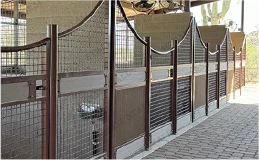
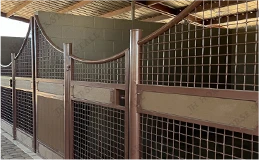
Horse stable gates are critical components of equine facilities, serving as barriers for animal containment and safety. They represent a specialized application within the broader agricultural gate industry, requiring specific design considerations regarding material strength, corrosion resistance, and horse behavior. The technical position of a stable gate falls between structural engineering principles – specifically load bearing and impact resistance – and animal husbandry best practices, ensuring both equine safety and handler efficiency. Core performance characteristics center around durability, ease of operation, and minimization of injury risk to horses. Failure of a stable gate can result in animal escape, injury to animals or personnel, and disruption of farm operations, highlighting the need for robust design and material selection. This guide provides an in-depth technical analysis of horse stable gates, covering material science, manufacturing processes, performance engineering, failure modes, and relevant industry standards.
Material Science & Manufacturing
The primary materials utilized in horse stable gate construction are steel (various alloys, including carbon steel and galvanized steel), aluminum alloys, and wood (typically hardwoods like oak or locust). Steel offers high tensile strength and weldability, making it suitable for structural components. Galvanization provides a zinc coating for corrosion protection. Aluminum offers a lighter weight and inherent corrosion resistance, but generally lower tensile strength than steel. Wood, while traditionally used, requires regular maintenance and is susceptible to rot and insect damage. Manufacturing processes vary depending on the chosen material. Steel gates are commonly fabricated through welding, with the weld quality being a critical factor in structural integrity. Welding parameters (current, voltage, electrode type) must be carefully controlled to prevent porosity and ensure adequate penetration. Aluminum gates may be welded or mechanically fastened using rivets or bolts. Wood gates are assembled using mortise-and-tenon joints, reinforced with screws or bolts. A significant challenge is addressing the localized stresses caused by horse impact. Finite element analysis (FEA) is increasingly used during the design phase to optimize material distribution and minimize stress concentrations. The selection of fasteners also plays a crucial role; stainless steel hardware is preferred due to its corrosion resistance. Furthermore, the paint or coating applied to steel or aluminum must be durable and non-toxic to horses, adhering to standards regarding heavy metal content.
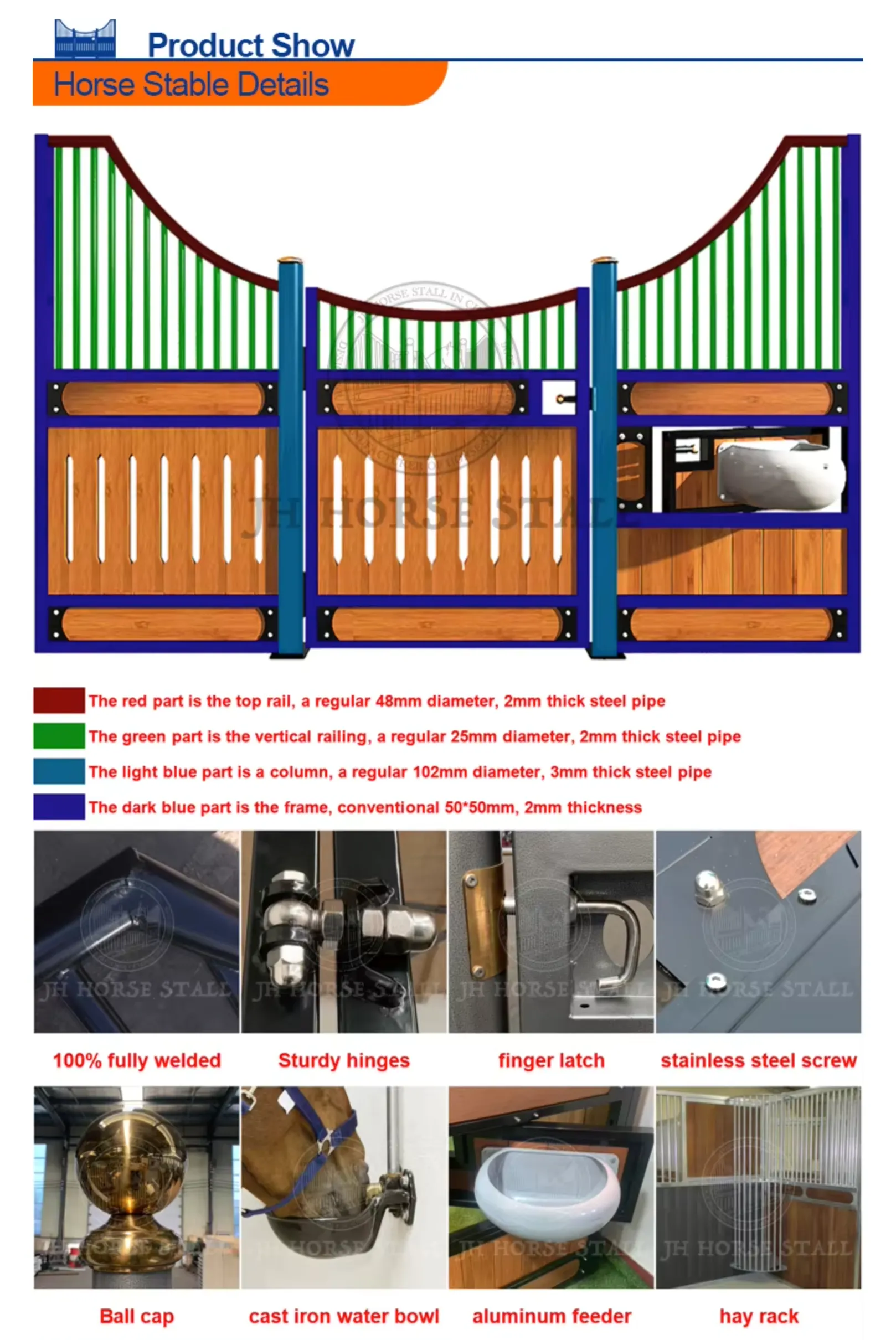
Performance & Engineering
Performance evaluation of stable gates focuses on several key areas: load-bearing capacity, impact resistance, and gate operation (swing and latching mechanisms). Load-bearing capacity is determined by analyzing the forces exerted by a horse leaning against the gate or attempting to push through it. This requires considering the weight of the horse, the angle of force application, and the gate's geometry. Impact resistance is assessed through pendulum impact testing, simulating a horse striking the gate. The energy absorbed during impact is a crucial metric. Gate operation is evaluated based on ease of opening and closing, smoothness of swing, and the reliability of the latching mechanism. Latch design is particularly important, preventing accidental opening while remaining easily accessible for handlers. Engineering considerations also include hinge design and placement. Hinges must be robust enough to withstand repeated cycles of opening and closing and to support the weight of the gate. Proper hinge placement minimizes stress on the gate frame and ensures smooth operation. Compliance requirements vary by region, but typically involve adherence to safety standards regarding protruding hardware and the absence of sharp edges that could injure horses. Galvanic corrosion is a concern when dissimilar metals are used in contact; appropriate insulation or coatings are necessary to prevent this.
Technical Specifications
| Parameter | Steel Gate (Galvanized) | Aluminum Alloy Gate | Wood Gate (Hardwood) |
|---|---|---|---|
| Tensile Strength (MPa) | 400-600 | 270-350 | 80-120 (dependent on wood species and grain) |
| Yield Strength (MPa) | 250-400 | 200-280 | 60-90 |
| Corrosion Resistance | Excellent (with galvanization) | Very Good | Poor (requires regular treatment) |
| Weight (kg/m2) | 15-25 | 8-12 | 10-18 |
| Impact Resistance (Joule) | 500-800 | 300-500 | 200-300 |
| Weldability | Excellent | Good | Not Applicable |
Failure Mode & Maintenance
Common failure modes in horse stable gates include fatigue cracking around welds (in steel gates), corrosion-induced weakening (particularly in non-galvanized steel or untreated wood), hinge failure, and latch mechanism failure. Fatigue cracking is initiated by repeated stress cycles caused by horse impact and gate operation. Corrosion weakens the material, reducing its load-bearing capacity. Hinge failure can occur due to excessive loading or wear. Latch mechanism failure can result from wear, corrosion, or improper adjustment. Delamination can occur in wood gates due to moisture ingress and freeze-thaw cycles. Maintenance practices are crucial for extending gate life. Regular inspection for corrosion, cracks, and loose fasteners is essential. Galvanized surfaces should be periodically inspected for zinc depletion and recoated as needed. Wood gates require regular painting or staining to protect against moisture and insect damage. Hinges should be lubricated to ensure smooth operation. Latches should be adjusted to maintain proper engagement. Proactive replacement of worn or damaged components prevents catastrophic failure. Non-destructive testing methods, such as visual inspection and ultrasonic testing, can be used to detect hidden cracks or corrosion. Furthermore, addressing soil conditions around gate posts can prevent post settling and gate misalignment, reducing stress on the gate structure.
Industry FAQ
Q: What is the optimal gate height for preventing horses from jumping?
A: While no gate can guarantee prevention of a determined jump, a height of 1.6 to 1.8 meters (5.2 to 5.9 feet) is generally recommended for most horse breeds. The height must be balanced with ease of handler operation. Higher gates require more robust hinge systems and may be more difficult to open and close.
Q: How does the gauge (thickness) of steel tubing affect gate durability?
A: Increasing the steel tubing gauge directly increases the gate’s resistance to bending and impact. A thicker gauge provides greater stiffness and load-bearing capacity. Commonly used gauges range from 14 gauge (thinner, suitable for smaller gates) to 11 gauge (thicker, preferred for larger, high-traffic gates).
Q: What are the benefits of using a self-closing gate mechanism?
A: Self-closing gates enhance safety by automatically securing the gate after use, preventing horses from accidentally wandering. These mechanisms typically utilize springs or gravity to return the gate to the closed position. Regular maintenance of the spring or hinge mechanism is crucial for reliable operation.
Q: What is the recommended spacing between vertical bars on a stable gate?
A: The recommended spacing is typically between 10-15 cm (4-6 inches) to prevent horses from sticking their heads through the gate and potentially becoming entangled. This spacing also minimizes the risk of foals escaping.
Q: How important is the finish (paint/coating) on a steel gate, and what types are preferred?
A: The finish is critically important for corrosion protection and aesthetic appeal. Powder coating is generally preferred over traditional paint due to its superior durability and resistance to chipping and fading. It's crucial that the coating be non-toxic and specifically formulated for outdoor use. Regular inspection and touch-up of the finish are vital for maintaining long-term corrosion resistance.
Conclusion
Horse stable gates represent a confluence of structural engineering, material science, and animal behavior considerations. Selecting the appropriate materials, manufacturing processes, and design features is paramount to ensuring durability, safety, and efficient operation. Galvanized steel remains the most common choice due to its balance of strength, cost-effectiveness, and corrosion resistance, though aluminum alloys are gaining traction for specific applications where weight is a critical factor. Regular maintenance, including inspection for corrosion, cracks, and wear, is essential for extending gate lifespan and preventing catastrophic failures.
Future developments in stable gate technology may focus on the integration of smart gate systems with automated locking mechanisms and remote monitoring capabilities. Advancements in coating technologies will likely yield even more durable and corrosion-resistant finishes. Furthermore, increased adoption of FEA and other simulation tools will enable engineers to optimize gate designs for specific loading conditions and animal behaviors, resulting in safer and more reliable stable gate systems.
-
Horses in the stable dance Air Quality and Ventilation Engineering
-
horses in a stable lyrics Data Storage Infrastructure Analysis
-
Horse Stables Hiring Near Me Structural Performance Analysis
-
Horse Stables Boarding Material Performance Analysis
-
horse stable toys Material Science and Manufacturing
-
horse stable gate Performance Engineering
-
Horse Stable Design Material Performance
-
horse stable blanket Performance Analysis
-
horse barns and stables Material Science and Manufacturing
-
cumberland falls horse riding stables Material Science and Manufacturing
-
Breyer Horse Stable Manufacturing Analysis
-
Black Horse Stables Construction and Performance
-
Barbie Stable and Horse Material Performance Analysis
-
arizona horses ponderosa stables Material Science and Manufacturing
-
lego friends horse stable Manufacturing Process and Performance Analysis